

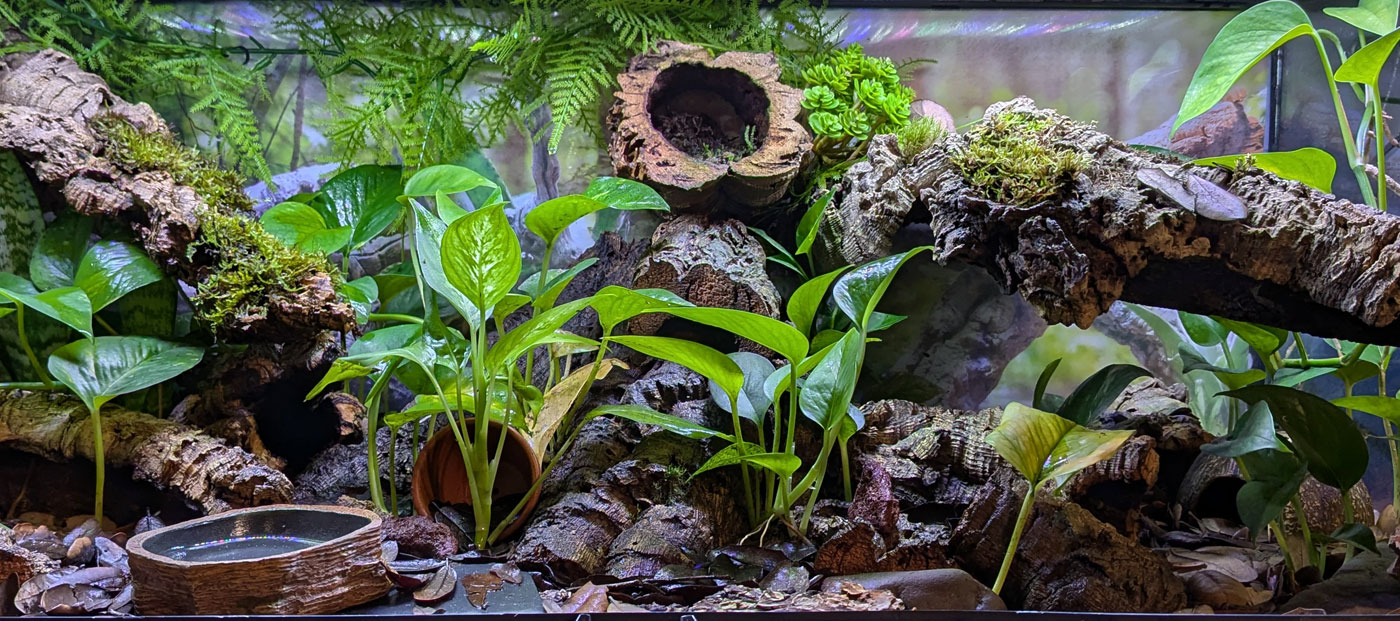
A Wild Guide to Creating a Poison Dart Frog Palace
Welcome to Vivarium 101, where we turn a glass box into a mini rainforest paradise for your poison dart frogs! Now, if you're envisioning some kind of DIY jungle, you're in the right place. The goal here is simple: to balance your dreams of a lush, enchanting habitat with what your frogs actually need to stay healthy and happy. Let's dive in!
The Frog Palace Design Debate
First off, while it’s tempting to go all out with elaborate foliage and secret tunnels, remember: this vivarium is for the frogs. That means no teeny decorative castles or flashy fountains! Your frogs need usable space, a gradient of temperatures and humidity, and room to jump, hide, and be their best froggy selves. So let’s build a vivarium that’s both frog-friendly and Instagram-ready.
Step 1: Usable Space – Frogs Need Room to Groove
When we say "usable space," we’re talking about the whole 3D vibe – vertical, horizontal, and everything in between. Poison dart frogs are tiny but mighty and love to explore, climb, and play hide-and-seek. Your setup needs to cater to this by adding leaf litter, background structures, and plants to create layers and cozy corners. The more places for them to boogie, the happier they’ll be.
Step 2: The Temp & Humidity Tango
Just like us, frogs appreciate a bit of choice. A nice gradient means they can self-regulate by hopping between cozy warm spots and cool, moist zones. You don’t need a single “perfect temperature”; instead, keep your room temp reasonable and let your plants, misting system, and substrate do the rest. Different frog species might need slightly different vibes, so consult those care sheets if you’re raising a particularly picky froggy!
The Enclosure: Frog Apartments (Hold the Stuffy Glass Box Feel)
A 20-gallon enclosure is the bare minimum for a pair of dart frogs, but let’s be honest—more space means more fun! Dart frogs will use every inch of height you give them, so a taller vivarium lets them showcase their climbing skills. And ventilation? That’s a must! A 2-inch mesh strip at the top will keep things fresh and prevent mold. Want to go the extra mile? Add a drainage system to manage excess water—no one wants a swamp where there should be a lush jungle.
Flooring: The False Bottom Drama
The vivarium floor isn’t just dirt – it’s a carefully layered system to avoid turning your masterpiece into a toxic bog. Start with a "false bottom" using materials like egg crate or mesh to let water drain away. Over that, add your substrate (soil-like stuff or clay-based for some mineral magic), and finish with a thick, cozy layer of leaf litter. Leaf litter isn’t just decoration; it’s where the frogs hang out, forage, and do their thing!
The Background: Froggy Climbing Gym
Think of the background as your frogs' vertical playground. You can go natural with cork bark, tree fern panels, or a silicone-and-soil wall – anything that gives them little nooks to explore and hides to pop out of like mini rainforest ninjas. Avoid smooth walls, though – frogs don’t skateboard!
Water Woes: Keep It Simple
No fancy waterfalls here! Moving water messes with humidity gradients and frog health. Stick to misting, which both waters plants and flushes the system while keeping humidity high. Use distilled or reverse osmosis water to avoid mineral buildup on plants and glass, and remember, frogs don’t care about fog effects – skip the foggers!
Plant It Like You Mean It
Plants do more than just look pretty; they provide coverage, safe spots, and breathable air for your froggies. Think sturdy, lush greenery over prickly or water-hoarding plants, and choose bromeliads for hiding spots and breeding areas. Moss might pop up on its own – let it grow where it’s happy but don’t go overboard with planting. Some leaf-shaded spots are ideal for that cool temperature gradient your frogs crave.
Lighting and Heat: The “Goldilocks” Effect
Your frogs need light to stay in sync with the day-night cycle. LEDs are ideal because they produce just enough heat to add to your gradient without turning the place into a sauna. If it’s getting too warm, check your room’s temperature before messing with the lights.
Microfauna: The Unsung Heroes
Meet the tiny custodians of your vivarium – springtails, isopods, and friends! They break down waste, add biodiversity, and make a handy snack for your frogs. Avoid larger isopods that might munch on plants, and don’t worry if you see little critter “booms” in population now and then – they’ll settle down as the system balances.
Patience, Grasshopper (Or Frog-Keeper)
Before you rush your frogs in, let the vivarium cycle – think of it as letting the environment calm down. Give the microfauna a chance to settle, plants to root, and any pesky fungi to die back. Adjust misting and ventilation as things grow and change. Soon enough, your frogs will have a vivarium worthy of their colorful charm!
Ready to Go?
Once your plants are thriving, the microfauna are chilling, and the whole setup feels stable, it’s time for the grand entrance – introducing the frogs! Remember to quarantine any new frog buddies, then sit back and watch your vibrant, tiny rainforest kingdom come to life. Happy frogging!