

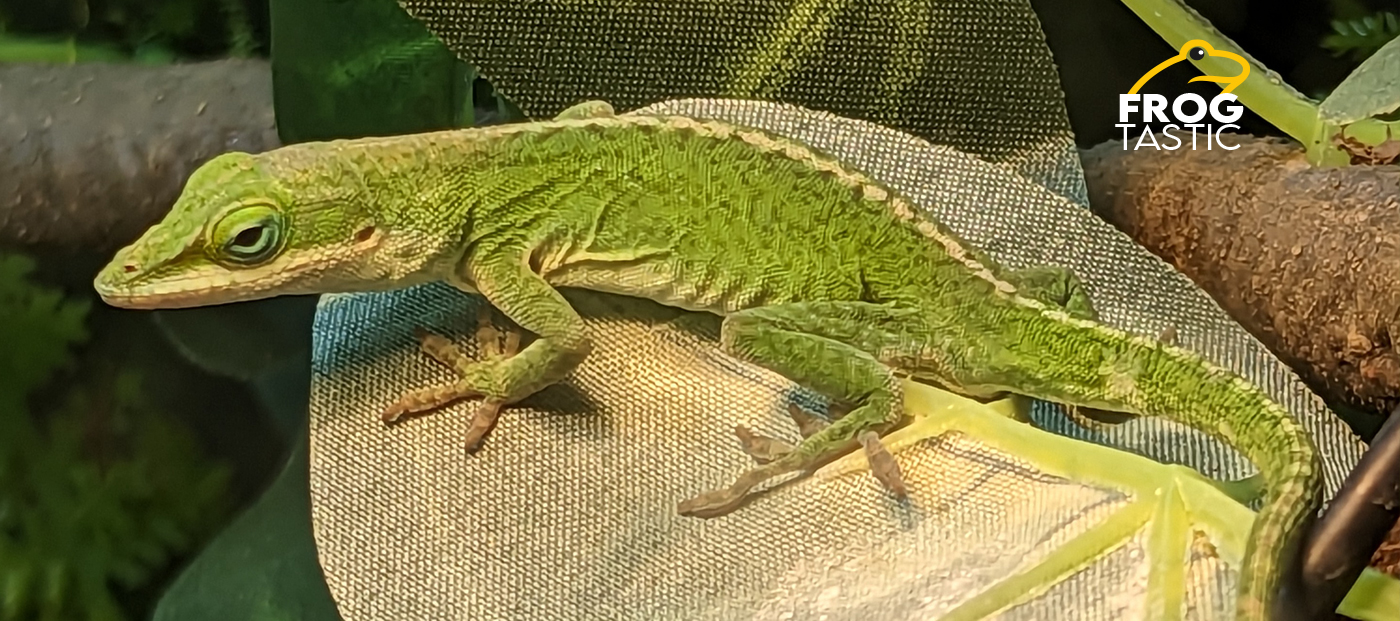
The Little Lizard with a Big Personality
The Green Anole (Anolis carolinensis) might look like a miniature dinosaur with its impressive colors and expressive movements, but don’t let that fool you! This small, vibrant reptile packs a lot of personality into its tiny frame. If you’re considering bringing a Green Anole into your life, buckle up—these little guys are full of surprises and (occasionally) some attitude. Let's dive into everything you need to know about their origins, care, and how to give your green buddy a happy, comfortable life.
Origins: The Southern Charm
Green Anoles are native to the southeastern United States, from Florida up to the Carolinas and even stretching westward to Texas. They thrive in warm, humid environments, spending their days basking in the sun, climbing trees, and hunting insects. Often called the “American chameleon” (even though they’re not true chameleons), Green Anoles have an impressive ability to change color from bright green to brown depending on their mood, temperature, or surroundings. This unique trait, paired with their flair for the dramatic, has made them a favorite among pet owners and herp enthusiasts alike.
Habitat & Housing: A Slice of the Tropics at Home
Green Anoles are arboreal, meaning they love to climb and perch high up in their environment. So, to make your Anole feel at home, you’ll want to set up a vertically spacious tank that’s at least 10 gallons for one anole, though 20 gallons is ideal, especially if you’re keeping more than one (but only one male per tank—they’re territorial divas).
Include plenty of branches, plants (fake or live), and vines for them to explore. You’re essentially crafting a tiny jungle gym that will keep them entertained and help them feel secure. Just remember, they prefer lots of cover, so go wild with the plants!
Lighting and Heating: Sunshine on Demand
Green Anoles thrive in warm, tropical conditions, so you’ll need to mimic their natural environment. Keep daytime temperatures between 75°F-80°F with a basking spot around 85°F-90°F. They also need a bit of a nighttime temperature drop, down to about 65°F-75°F. A heat lamp or ceramic heat emitter will help you get the right temps.
For lighting, these little guys are sun worshippers! They require 10-12 hours of UVB lighting each day to help them metabolize calcium and keep their bones healthy. This isn’t optional—without proper UVB exposure, Anoles can develop metabolic bone disease, a serious condition. So, invest in a quality UVB light to keep your green buddy in tip-top shape.
Humidity: Keep It Steamy (but Not Too Steamy)
Green Anoles thrive in humidity levels between 60-70%. A quick mist of the tank twice daily usually does the trick, but if you’re in a particularly dry area, consider a small humidifier. Anoles don’t drink from standing water, so you’ll often see them licking water droplets off plants or tank walls. Make sure you’re misting regularly to keep them hydrated and happy!
Roommates? Green Anoles and Green Tree Frogs
Thinking of a multi-species setup? Green Anoles and Green Tree Frogs can actually make compatible tankmates! Since they share similar humidity, lighting, and temperature needs, both can thrive in a well-planned, tropical enclosure. But keep in mind, you'll need enough space (20 gallons minimum) and plenty of plants, branches, and hiding spots for everyone to feel comfortable and secure. Also, feed them separately, as both species can be competitive (and enthusiastic!) eaters. Observing these two species interacting can be a blast—they each bring their own unique personalities to the tank, adding an extra layer of entertainment to your little indoor jungle.
Substrate: Something Simple
When it comes to substrate, Green Anoles are pretty easygoing. You can use coconut fiber, soil (make sure it’s pesticide-free!), or paper towels. Coconut fiber or soil will help with humidity, and both can be spot-cleaned easily. Avoid any loose substrates like sand or gravel that could cause impaction if ingested. And as cute as it sounds, they’re not fans of “fancy bedding,” so keep it simple and safe!
Feeding: Tiny Hunters in Action
Green Anoles are insectivores, which means their diet consists of small, wriggly things. Feed them a variety of insects like crickets, mealworms, and small roaches, which should be dusted with a calcium and vitamin D3 supplement about three times a week to keep them in top health. Remember, feeder insects should be gut-loaded (fed a nutritious diet) to give your Anole the most balanced meal possible.
If you notice your Anole doing their little tail wiggle, get ready for action! This pre-hunt shake signals they’re about to pounce on their prey. Watching them hunt can be endlessly entertaining—they’re small, but they’re fearless!
Shedding: A Full-Body Makeover
Like many reptiles, Green Anoles shed their skin regularly. This can be a bit of a drama because it doesn’t happen all at once; instead, they’ll shed in patches. During shedding time, keep humidity levels a little higher and make sure they have rough surfaces to rub against to help remove the old skin. And if you’re lucky, you might catch them nibbling on their old skin (yep, they do that—it’s packed with nutrients!).
Handling: Look but Don’t Hold (Too Much)
Green Anoles are delightful to observe but can be a bit skittish when it comes to handling. While they’re not aggressive, they are jumpy and fast, making them better pets to watch rather than handle. If you do need to handle your Anole, do so gently and try to keep sessions short to avoid stressing them out. Always wash your hands before and after handling to avoid transferring oils or bacteria. Fun fact: Anoles can drop their tails as a defense mechanism if they feel threatened, so handle with care! The tail will eventually regrow, but it won’t look quite the same.
Health & Wellness: Keeping Your Anole in Prime Condition
A healthy Anole is active, alert, and has bright coloring. If you notice signs like lethargy, loss of appetite, or dull coloring, it might indicate stress or an underlying health issue. Regularly check your Anole’s enclosure to ensure temperature, humidity, and lighting are at optimal levels, and keep an eye on their diet and hydration. A little daily observation goes a long way in keeping these small wonders happy.
Final Thoughts: Bringing a Bit of the Wild Indoors
Green Anoles are the perfect mix of feisty and fascinating, offering endless entertainment as they dart around, change colors, and hunt their tiny prey. While they may not be a fan of snuggling, their curious personalities make them a joy to watch. With proper care, attention to their environmental needs, and a little patience, these charming little reptiles can be a wonderful addition to your home.